3
Years of focused experience on residential and light commercial tree care
Identify Problems Before They Become Hazards
Tree Health Assessments in Buckfield and Wayne, ME for decay, structural concerns, or storm damage affecting stability
Lone Pine Tree Care evaluates tree condition, structure, and overall health on residential and light commercial properties throughout Buckfield and Wayne, Maine. You request this service when a tree shows signs of decline, when limbs die back without obvious cause, or when you need professional guidance on whether a tree should be preserved or removed. The arborist examines bark, foliage, branch unions, and root flare to identify disease, decay, mechanical damage, and structural weaknesses that compromise safety or long-term viability.
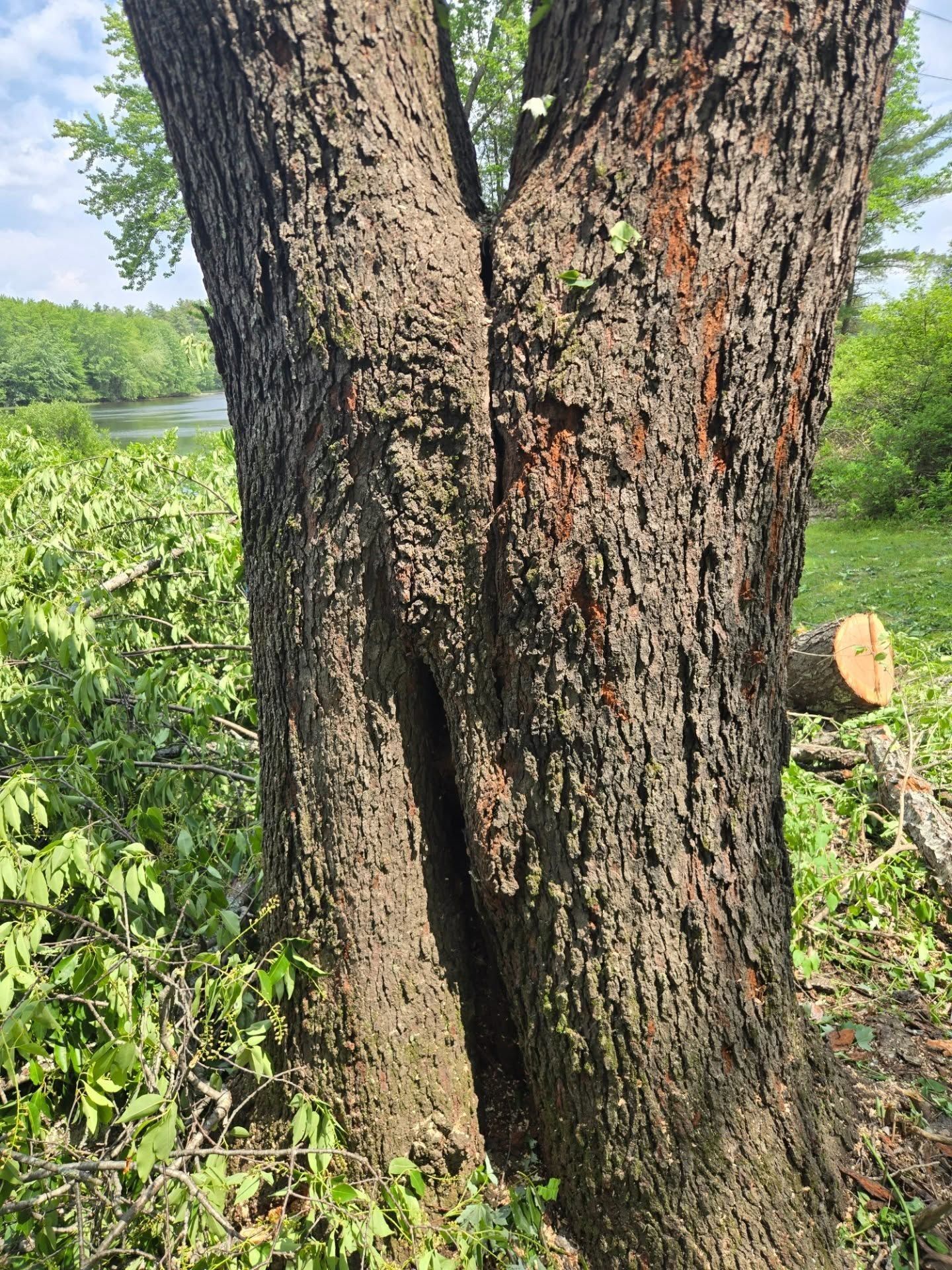
Trees in Maine face stress from freeze-thaw cycles, saturated soils during spring runoff, and opportunistic fungi that colonize wounds left by broken branches or mechanical injury. The service addresses these conditions by documenting visible symptoms, probing suspect areas with a mallet or probe to detect hollow trunks, and assessing whether the tree can recover with corrective pruning or whether removal is the only option that eliminates the hazard. Arborist License FCU4305 provides qualified oversight and ensures recommendations follow industry standards for tree risk assessment.
If a tree on your Buckfield or Wayne, ME property shows unusual dieback, leans more than it did last year, or has you questioning its safety, contact Lone Pine Tree Care for a free quote and practical next steps.
What a Tree Health Assessment Covers
You walk the property with the arborist, pointing out trees that concern you, and the crew examines each specimen from roots to canopy. The assessment includes checking for cracked bark, fungal fruiting bodies at the base, dead branch tips, and cavities that expose heartwood. The arborist notes lean angle, proximity to structures, and soil conditions that affect root stability, then provides a written summary of findings and recommends pruning, monitoring, or removal based on what the inspection reveals.
After the assessment, you will receive a clear explanation of which trees are healthy, which require corrective action, and which pose imminent risk due to advanced decay or structural failure. Lone Pine Tree Care delivers recommendations focused on preservation when possible and safe removal when necessary, so you understand your options and can prioritize work based on budget and risk tolerance. The assessment gives you documentation to share with insurers, municipal inspectors, or buyers if you are selling the property and tree condition affects the transaction.
The arborist uses a rubber mallet to sound trunks for hollowness, a probe to measure decay depth, and visual inspection aided by binoculars for upper canopy branches. The service does not include soil testing, insect identification beyond visible damage, or treatment of diseases, though the crew will refer you to specialists if the assessment reveals conditions requiring laboratory analysis or chemical intervention. Recommendations are based on observable conditions at the time of inspection and may change if the tree declines further or sustains new damage.
Assessment Questions in Buckfield and Wayne, ME
Homeowners and property managers often ask what signs warrant an assessment, how long the evaluation takes, and what happens after the arborist completes the inspection.
What symptoms suggest a tree needs professional assessment?
Dead branches in the upper canopy, fungal shelves growing from the trunk, sudden lean after a storm, cracks in major limbs, or bark peeling away from the trunk all indicate potential structural or health issues that require closer examination.
How long does a tree health assessment take?
A single tree assessment typically takes fifteen to thirty minutes, though properties with multiple specimens or complex conditions may require an hour or more to document findings and explain recommendations thoroughly.
What is the difference between a health assessment and a hazard evaluation?
A health assessment focuses on disease and physiological decline, while a hazard evaluation emphasizes structural failure risk and proximity to targets, though both overlap when decay compromises the tree's mechanical stability.
How does the arborist determine if a tree can be saved?
The crew evaluates the extent of decay, the tree's compartmentalization response, remaining live crown ratio, and whether corrective pruning can reduce risk enough to justify keeping the tree rather than removing it entirely.
What happens if the assessment reveals a hazardous tree?
You receive a written recommendation prioritizing removal or mitigation steps, a quote for the necessary work, and guidance on timing based on the severity of the hazard and weather forecasts for Buckfield's upcoming season.
Lone Pine Tree Care provides free quotes that include a walkthrough of assessment findings and recommendations tailored to your property's specific trees and layout. If you are uncertain about a tree's condition or need documentation for planning purposes, schedule an evaluation to receive qualified guidance and clear next steps based on what the arborist observes.