3
Years of focused experience on residential and light commercial tree care
Trees Built to Last Through Maine Weather
Structural pruning in Buckfield for trees showing bark union issues, decay signs, or disease indicators
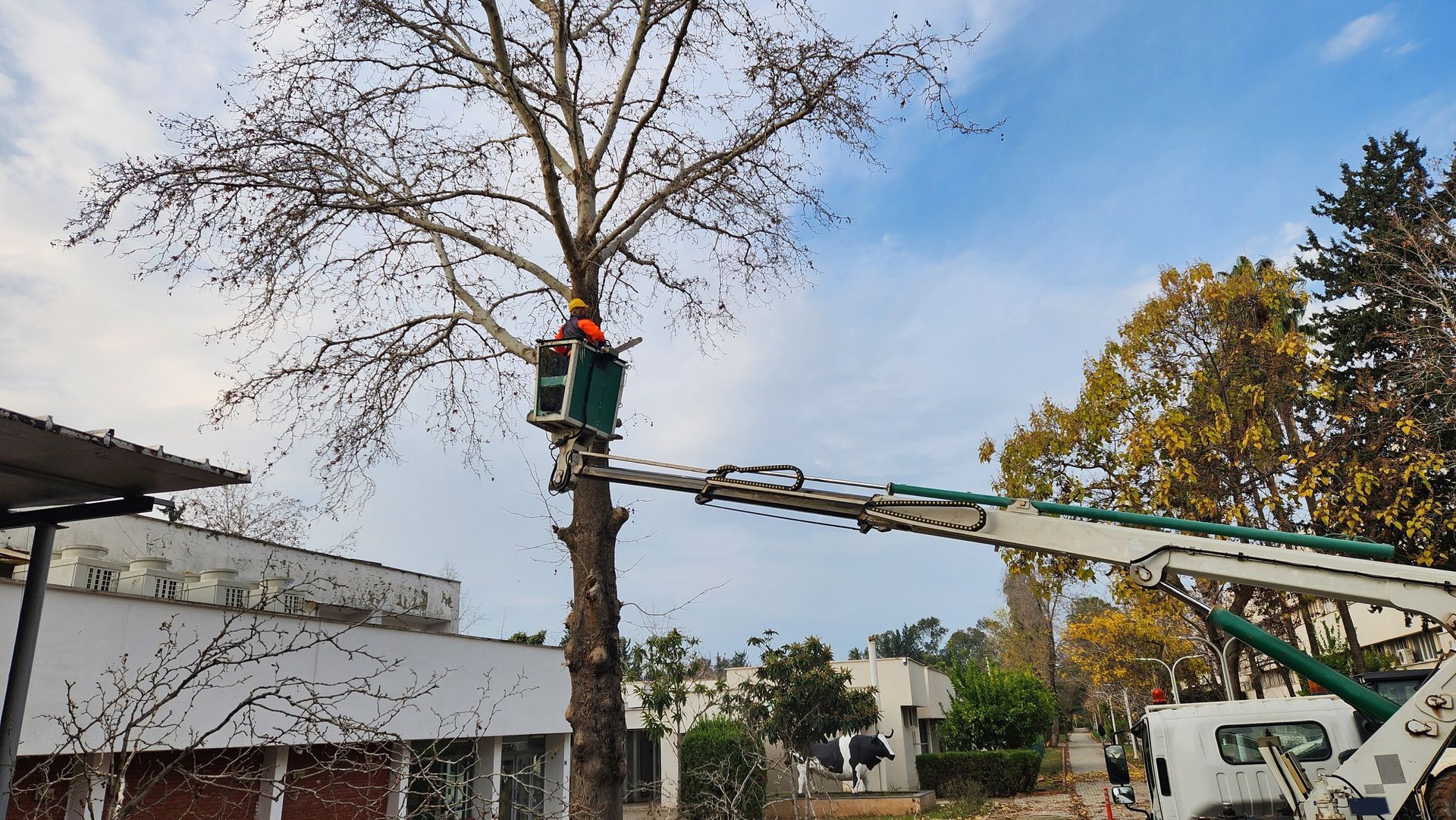
Lone Pine Tree Care performs structural pruning in Buckfield by evaluating each tree for risk factors including bark unions, woodpecker activity, mushroom growth, and internal decay patterns. The service addresses trees that show structural weakness before they become hazardous during ice storms or high winds common to central Maine. Property owners request this work when they notice mushrooms near the base, bark inclusions where branches meet the trunk, or woodpecker holes that suggest internal rot.
The pruning process begins with a complete risk assessment to identify where the tree has developed weak attachment points or where disease has compromised structural integrity. Branches with poor angles, co-dominant stems with included bark, and limbs showing decay are selectively removed to redistribute weight and reduce the likelihood of failure during weather events.
Schedule a property evaluation to identify specific structural concerns in your trees.
What Structural Pruning Prevents Over Time
The assessment examines bark unions where two stems grow too close together and create a weak point that can split under snow or ice load. Woodpecker activity often signals insect infestation or soft wood inside the trunk, and mushroom growth indicates advanced decay that requires immediate attention. Each cut is planned to preserve the tree's natural defense system while removing the sections most likely to fail.
After pruning, you notice improved weight distribution across the canopy and removal of limbs that would have broken during the next heavy snow. Trees with corrected structural issues develop stronger branch angles as new growth follows the revised architecture. Lone Pine Tree Care documents which sections were removed and why, so you understand what changed and what to monitor going forward.
This service does not treat disease directly but removes infected wood to slow progression and reduce the risk of the tree becoming a hazard. Trees with advanced decay may require cabling or bracing in addition to pruning, depending on what the assessment reveals about the remaining structural capacity.
Questions Property Owners Usually Ask
Structural pruning decisions in Buckfield often revolve around timing, tree health indicators, and what the work actually accomplishes for long-term safety.
What does a bark union indicate about tree stability?
A bark union forms when two stems grow together with bark trapped between them instead of solid wood, creating a weak attachment point that splits more easily under load than a properly formed branch collar.
How do you determine which branches to remove during structural pruning?
The decision is based on branch angle, attachment strength, signs of decay such as mushrooms or soft wood, and weight distribution across the canopy to reduce stress on weak points.
Why do woodpecker holes suggest the tree needs pruning?
Woodpeckers target trees with insect infestations or decayed wood, both of which indicate compromised structural integrity that requires assessment and often selective removal of affected sections.
When is the best time to perform structural pruning in Buckfield?
Late fall through early spring is preferred for most species because trees are dormant, disease spread is minimized, and you can see the branch structure clearly without foliage.
What happens to a tree after structural pruning is completed?
The tree redirects energy to remaining healthy branches, develops stronger growth patterns following the new architecture, and becomes less likely to lose limbs during storms or under snow load.
Lone Pine Tree Care provides detailed documentation of structural issues found during assessment and explains which sections were removed to reduce risk. Arrange an on-site consultation to review specific concerns with your trees before the next winter season.